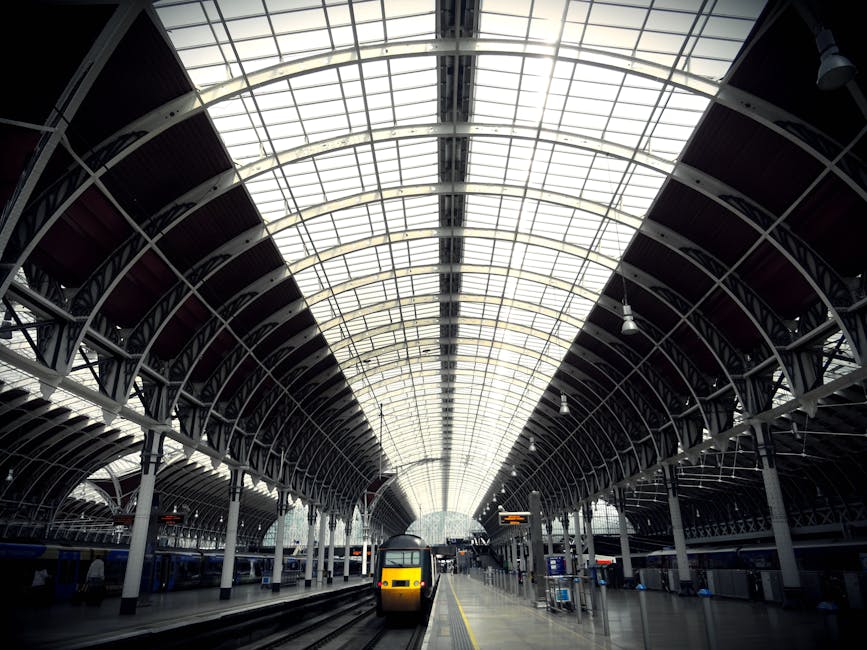
Best removal routes for Praed Street and Paddington Station
Moving in and out of Paddington is rarely just a matter of loading boxes and driving off. If your route passes through Praed Street or around Paddington Station, the real challenge is usually timing, access, and working with a road network that is busy even on an ordinary day. The best removal routes for Praed Street and Paddington Station are the ones that keep your move efficient, reduce stoppages, and help you avoid unnecessary stress on the day.
This guide breaks the area down in plain English. You will find the most practical route choices, the reasons some approaches work better than others, and how to plan a move that fits the realities of central London traffic. Whether you are moving a flat, a family home, a student room, or an office, the aim is simple: get you from A to B without turning a removal day into a parking-and-permit puzzle.
For readers comparing service options as they plan, it may also help to review the full range of moving services in Paddington, along with pricing and quotes and the practical guidance on packing and boxes.
Table of Contents
- Why route choice matters in this part of Paddington
- How removals around Praed Street and Paddington Station work
- Key benefits and practical advantages
- Who this is for and when it makes sense
- Step-by-step guidance
- Expert tips for better results
- Common mistakes to avoid
- Tools, resources and recommendations
- Law, compliance, standards, and best practice
- Options, methods, and route comparison
- Case study or real-world example
- Practical checklist
- Conclusion
- Frequently asked questions
Why Best removal routes for Praed Street and Paddington Station Matters
Praed Street sits in one of the most congested and operationally sensitive areas in west central London. Add Paddington Station, taxi flows, bus movements, pedestrian crossings, hotel traffic, and frequent short-stay stopping, and you get an area where the wrong approach can waste time before the van has even reached the property.
Route choice matters because removals are not only about distance. They are about access quality. A shorter route can still be slower if it forces your vehicle into bottlenecks, awkward turning points, or places where unloading takes longer than expected. In this part of London, one badly chosen approach can mean double-parking pressure, missed time windows, or extra carrying distance from the vehicle to the front door.
The stakes are especially high for moves that involve fragile items, bulky furniture, or a tight schedule. If you are booking help for house removals in Paddington or arranging a smaller van for a compact move, route efficiency directly affects how smoothly the day runs. And if your move is time-sensitive, the need is even clearer: the best route is the one that gives the crew room to work, not just the one that looks shortest on a map.
There is also a trust angle. Clients often judge a removal company by the visible part of the job: arrival time, vehicle positioning, and how calmly the team handles a difficult street. A good route plan is one of those invisible signs that the move has been thought through properly.
Expert summary: In this area, the best route is usually the one that prioritises access, timing, and unloading practicality over straight-line distance. That is what saves the most time in real life.
How Best removal routes for Praed Street and Paddington Station Works
Think of removal routing in Paddington as a three-part decision: where the vehicle enters, where it can safely pause, and how far items must be carried. Those three factors often matter more than the postcode itself.
In practical terms, most moves in this zone begin by asking three questions:
- Which approach road is least likely to be blocked or slowed by station traffic?
- Where can the van stop without causing risk, friction, or avoidable delays?
- How can the crew minimise lifting distance from van to property?
Paddington Station creates a unique movement pattern. There is steady flow from taxis, ride-hailing vehicles, buses, pedestrians, and station-related traffic. That means a removal vehicle should not be sent in on guesswork. For many moves, a driver will benefit from approaching with a clear unloading plan and a fallback option if the first stopping point is occupied.
Different types of moves also change the route logic. For example, a small flat move may work better with a nimble vehicle and a route that allows quicker access to side streets. A larger household move may need more time, a larger vehicle, and a less rushed approach, possibly paired with storage in Paddington if move-out and move-in dates do not line up neatly.
And yes, the map app is useful. But it is not enough on its own. A sat-nav can suggest a fastest route; it cannot tell you that the kerb space outside the building is taken by a delivery van and a black cab already waiting for someone with too many suitcases.
Key Benefits and Practical Advantages
Getting the route right brings benefits that are bigger than most people expect. The obvious one is time saved, but the more important gains are usually control and predictability.
- Less waiting around: A better route reduces time lost in slow traffic and unnecessary loops.
- Safer loading and unloading: When the vehicle can position properly, lifting is more controlled and less rushed.
- Lower risk of access issues: Good route planning helps avoid spots where stopping is awkward or restricted.
- Better schedule accuracy: Teams can keep closer to booked arrival and delivery windows.
- Reduced stress on move day: That matters more than it sounds. People remember whether a move felt chaotic.
There are financial advantages too. If a removal takes longer because the van is delayed or has to park further away, labour time can rise. Even if the difference is modest, it adds friction. For customers comparing options, this is one reason to look closely at a company's operational planning, not just whether they own a van. If you are exploring a smaller-scale option, a man with a van in Paddington can be a practical fit for quicker local access and shorter carry distances.
For offices, the benefit is often continuity. A well-timed route near Paddington Station can reduce business disruption and keep equipment moving on schedule. If that is your situation, it is worth reviewing office removals in Paddington alongside route planning.
Who This Is For and When It Makes Sense
This topic matters to more people than you might think. The obvious audience is anyone moving from a property near Praed Street or Paddington Station, but the practical use extends further.
Typical situations where route planning is worth extra attention
- Flat moves: Shared entrances, stairwells, and short-stay stopping spaces make access planning essential. See also flat removals in Paddington.
- House moves: Larger loads need better scheduling and a route that supports a longer loading window.
- Student moves: Often compact, sometimes last-minute, and usually very time-sensitive. Student removals are especially sensitive to route delays.
- Furniture-only jobs: Heavy items benefit from the shortest practical carry, especially on busy streets. Consider furniture removals in Paddington.
- Specialist items: Pianos, awkward wardrobes, mirrors, and large desks need route and access details confirmed early. For delicate heavy items, see piano removals in Paddington.
- Same-day or urgent moves: A fast response only works if the route plan is simple and realistic. Same-day removals are especially dependent on local knowledge.
It also makes sense for people moving into or out of nearby residential streets where parking changes quickly through the day. If you live between the station and the canal, the difference between an easy move and a frustrating one often comes down to a couple of streets and a lot of timing.
Step-by-Step Guidance
If you want the most reliable approach, treat the move as a route-and-access project rather than a one-off drive. Here is a sensible way to do it.
- Confirm the property access point. Identify the exact entrance, not just the street address. Rear access, side gates, and loading doors can change the whole plan.
- Check the likely vehicle size. A smaller van may suit tighter streets; a larger vehicle may be fine if the loading point is straightforward.
- Map the approach and exit. The easiest route in may not be the easiest route out. Two-way planning avoids surprises later.
- Decide on loading time. If the property requires a longer carry, allow extra time. Paddington is not a place where you want a crew to rush the final 20 metres.
- Prepare parking or stopping arrangements. Where possible, confirm whether temporary stopping is realistic. Even where formal permissions are not needed, practical access matters.
- Pack for fast handover. Label rooms clearly and keep essentials separate. Better packing reduces time spent with doors open and items exposed. Helpful guidance is available on packing and boxes in Paddington.
- Build in a traffic buffer. In central London, it is wise to assume minor delays. Planning for the realistic version of the day is better than planning for the ideal version.
- Confirm the unloading sequence. The first items out should be the ones that clear space or support assembly, not the boxes you packed last Sunday because they looked the prettiest.
If you are moving a full household, this process may feel obvious. In practice, though, the difference between "we think it should be okay" and "we have a route, a stop point, and a loading order" is substantial.
Expert Tips for Better Results
The following tips are the sort that usually come from experience rather than theory. They are small, but they add up.
1) Avoid peak friction around the station
Busy commuter times are not friendly to removal vehicles. Even when traffic itself is moving, the flow of people and taxis can make short stops harder than expected. If your schedule allows, choose a quieter window.
2) Keep the van choice realistic
It is tempting to book the biggest van in case. But around Praed Street, a vehicle that is too large for the access environment can be slower overall. For many local jobs, a more agile vehicle is the smarter choice. The page on removal van options in Paddington is a useful starting point if you are deciding vehicle size.
3) Reduce carrying distance wherever possible
A route that allows the van to stop 15 metres closer to the entrance can be more valuable than shaving a minute off the drive. This is especially true for wardrobes, appliances, and boxed books, which seem to multiply as soon as you reach the stairs.
4) Use the local street pattern intelligently
In Paddington, local familiarity helps. A team that understands the practical differences between the busier arterial roads and the quieter side streets is usually better placed to keep the move flowing. That local judgement is one reason some customers prefer established removal companies in Paddington over a generic listing.
5) Separate urgent items early
Essentials such as documents, chargers, medicines, and a kettle should travel in a way that keeps them easy to reach. This is less about route planning itself and more about protecting the schedule once the vehicle arrives.
Practical reminder: a smooth route can still be ruined by poor packing. The two go hand in hand.
Common Mistakes to Avoid
Most problems in this area are avoidable. They happen when people assume a central London route will behave like a suburban one. It rarely does.
- Relying only on a navigation app: Apps are useful, but they do not always reflect live loading constraints or the reality of the kerb outside your building.
- Underestimating station-side congestion: The area around Paddington Station stays busy for a reason. Build that into the plan.
- Choosing the wrong vehicle size: Bigger is not always better if the route is tight or stopping time is limited.
- Ignoring carry distance: A property that looks close on the map may still be awkward in practice.
- Leaving packing to the last minute: This creates delays at exactly the moment when the route needs to stay efficient.
- Not checking specialist item needs: Pianos, artwork, and bulky furniture need more than standard loading logic.
- Skipping the backup plan: If the first stopping point is blocked, the team needs an alternative.
One common error is assuming that because a street is technically accessible, it is therefore practical. In removals, those are not the same thing. Not even close.
Tools, Resources and Recommendations
Good route planning is a mix of local understanding and practical tools. You do not need anything fancy, but a few basics help enormously.
Useful tools
- Live map apps: Helpful for broad traffic patterns and broad route checks.
- Street-view style previews: Good for checking corners, width, and likely stopping points.
- Building access notes: Simple written instructions about entrances, buzzers, and service doors.
- Inventory lists: Useful for matching load size to vehicle size and route timing.
Helpful service pages for planning
If you are still shaping the move, the following pages can help you choose a suitable setup: removals in Paddington, removal services in Paddington, and about the team. If you need support after the move rather than during it, storage in Paddington can be a sensible buffer when dates do not align.
For broader company background and customer reassurance, readers often check service standards and support pages such as insurance and safety and health and safety policy. Those pages do not move boxes for you, of course, but they do help you judge professionalism.
Law, Compliance, Standards, and Best Practice
Removal work in central London should be handled with ordinary care, appropriate insurance, and respect for local access conditions. Exact requirements can vary by street, building, and council-controlled arrangements, so it is wise not to assume that one move is governed exactly like another.
From a practical compliance perspective, the important points are straightforward:
- Parking and stopping: Do not assume a van can stop anywhere just because the job is quick.
- Safe loading: Items should be loaded and secured properly to reduce damage or injury risk.
- Building rules: Many blocks and managed properties have access instructions that should be followed carefully.
- Insurance: Customers should check that the mover has appropriate cover for transit and handling.
- Working safely: Teams should avoid unsafe lifting, blocked exits, and rushed manoeuvres in tight spaces.
Best practice also includes clear communication before move day. If the company asks for photographs of the entrance, stairs, or loading point, that is usually a good sign. It means they are planning rather than improvising.
For readers who value operational transparency, it can also be worth reviewing the company's terms and conditions, payment and security, and privacy policy. These are not glamorous pages, but they help set expectations clearly.
Options, Methods, and Route Comparison
Different moves around Praed Street and Paddington Station benefit from different methods. The table below gives a practical comparison.
| Approach | Best for | Strengths | Possible downside |
|---|---|---|---|
| Direct station-side approach | Small, well-timed jobs with confirmed stopping access | Shorter carry distance, quick loading if the spot is available | Can be disrupted by station traffic and short-stay restrictions |
| Side-street approach | Flat moves, furniture moves, and jobs needing calmer loading | Often less chaotic, sometimes easier to stage items | May add walking distance to the property |
| Early-morning move window | Time-sensitive local removals | Less traffic pressure and better chance of usable stopping space | Requires stronger coordination and punctuality |
| Split-load method | Moves with mixed load sizes or restricted access | Flexible, can reduce pressure at the property entrance | May take longer overall |
| Storage-assisted move | Moves with delayed handover or staged relocation | Reduces deadline pressure and simplifies route planning | Extra handling step and additional planning required |
The right option depends on property type, vehicle size, load volume, and time of day. There is no single "best" route for every move. The better question is: which route gives the crew the best chance to park safely, work efficiently, and keep the day under control?
Case Study or Real-World Example
Imagine a two-bedroom flat move from a building close to Praed Street to another property a short distance away in west London. On paper, the journey is straightforward. In practice, the building entrance is on a busy stretch, and the movers also need to handle a sofa, a dining table, several boxed books, and a mirror.
The first instinct might be to send the van as directly as possible to the front. But after checking the access notes, the team chooses a calmer approach that keeps the vehicle close enough for efficient loading while avoiding the worst of the station-side congestion. They arrive slightly earlier than the main move window, confirm the stop point, and unload the larger items first while the route remains workable.
The result is not dramatic, and that is the point. Good removals rarely look dramatic. They look orderly. The furniture arrives without chaos, the carry distances stay manageable, and the clients are not left standing on the pavement wondering whether the van will ever get near the door.
This is exactly where local experience pays off. A move of this sort can be supported by the right combination of man and van support in Paddington and practical local knowledge. If you are moving out of a nearby canal-side development, street-level access planning becomes even more important, which is why guides such as street-by-street packing tips for Paddington Basin can be useful background reading.
Practical Checklist
Use this checklist before move day. It is simple, but it catches a surprising number of problems.
- Confirm the exact property entrance.
- Check whether the van can stop close enough for a sensible carry distance.
- Share any building access instructions in advance.
- Identify bulky or fragile items that need extra handling.
- Separate essentials from general boxes.
- Review timing around station traffic and peak hours.
- Make sure your removal company understands the local route and access constraints.
- Ask whether a smaller or larger vehicle is more practical for your address.
- Keep contact details available on the day.
- Confirm insurance, payment, and service terms before the move starts.
If you complete only half of those items, you will still be ahead of many last-minute movers. Complete all of them, and the day tends to feel much calmer.
Conclusion
The best removal routes for Praed Street and Paddington Station are not chosen by distance alone. They are chosen by access, timing, vehicle fit, and the realities of a very busy part of London. A route that looks slightly longer on the map can easily be the better option if it reduces friction, avoids station congestion, and gives your movers a better unloading position.
For most people, the smart move is to treat the route as part of the service, not an afterthought. That means planning the stop point, matching the vehicle to the street, and allowing enough time for the job to be done properly. If you get those basics right, the rest usually follows.
For a trusted next step, review the available services, compare your moving needs, and choose a team that understands local access as well as the load itself.
Get a free quote today and see how much you can save.
Frequently Asked Questions
What is the best route for removals near Praed Street and Paddington Station?
The best route is usually the one that offers the easiest safe stopping point, shortest practical carry distance, and least exposure to station-side congestion. In this part of London, the "fastest" route on a map is not always the most efficient for unloading.
Why does route planning matter so much in Paddington?
Because the area around Paddington Station is busy, vehicle movement is heavily influenced by taxis, buses, pedestrians, and short-stay stopping pressures. Good route planning prevents unnecessary delays and keeps the move safer and calmer.
Should I use a large van or a smaller van for a move here?
It depends on the property and access conditions. A smaller van can be easier for tight streets and quick stops, while a larger van may suit bigger loads if the access point is straightforward. The best choice balances load size with manoeuvrability.
Is it better to move early in the morning?
Often, yes. Earlier windows can reduce traffic pressure and improve the chance of getting a workable stopping point. That said, the ideal timing still depends on your property, the building rules, and your removal company's schedule.
What type of move benefits most from local route knowledge?
Flat moves, furniture removals, urgent same-day moves, and office relocations all benefit from local route knowledge. These moves are more sensitive to parking, carrying distance, and timing than people usually expect.
Can I plan a removals route using Google Maps alone?
You can start there, but it should not be your only reference. Maps are useful for road layout and travel time estimates, but they cannot fully account for live kerbside conditions, building access, or loading realities outside the property.
What if the van cannot stop right outside the building?
That is common in central London. A good removal plan includes a fallback stopping point and a sensible carrying route from vehicle to entrance. The key is to keep the extra distance manageable and safe.
Do I need special help for heavy or fragile items?
Yes, especially for pianos, large wardrobes, mirrors, artwork, and some appliances. These items need careful handling, and the route should support safe loading and unloading. Specialist services are worth considering when the item or access is awkward.
How far in advance should I book my removal?
As early as you can, particularly if you are moving at a busy time of month or need a specific time window near Paddington Station. Early booking gives more flexibility for route planning, vehicle choice, and access checks.
Are there official parking rules I should check before moving?
Possibly, depending on the street and the type of stopping required. It is sensible to check local parking and loading conditions in advance rather than assume a van can stop anywhere briefly. If you are unsure, ask the mover how they usually handle access in the area.
What is the safest way to prepare for a busy street move?
Pack early, label clearly, confirm the entrance point, and agree the route and stopping plan before move day. Safety improves when everyone knows where the van is going, where it can pause, and what gets loaded first.
Where can I find a reliable removals team for this area?
Look for a company that offers clear service information, transparent pricing, and practical local support. Pages such as removal companies in Paddington and contact are a sensible place to start when you are ready to compare options.